
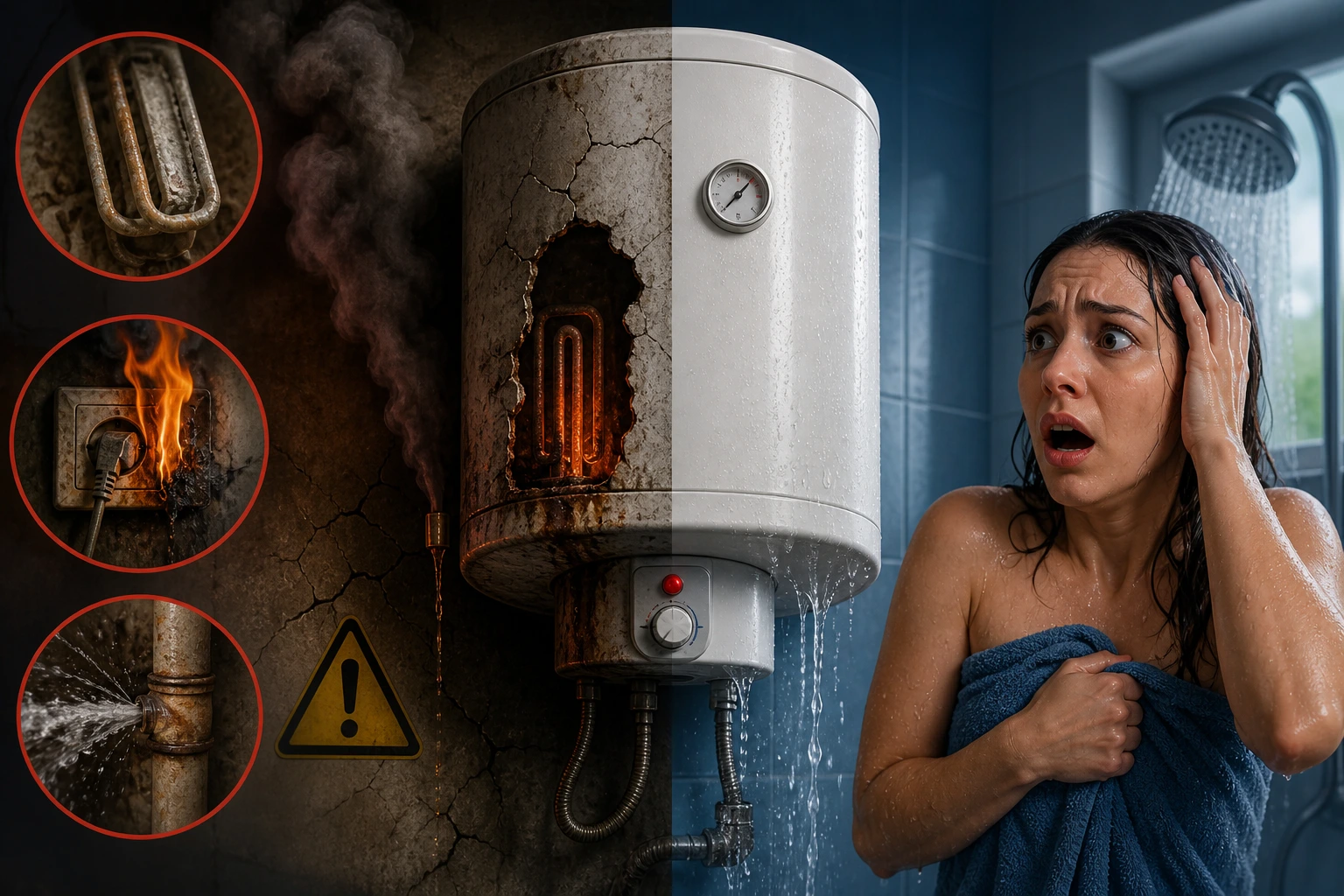
A hot shower on a freezing winter morning is one of life’s simple joys. However, the appliance providing this comfort—your electrical geyser (water heater)—is essentially a pressurized tank of boiling water combined with high-voltage electricity. When neglected, it transforms from a comfort device into a severe safety hazard.
Why Do Geysers Become Dangerous?
Most households install a geyser and completely forget about it until it stops heating. This "fit and forget" mentality is incredibly risky, especially in regions with hard groundwater.
1. The Silent Killer: Hard Water Scaling
When mineral-heavy water is heated, calcium and magnesium carbonate precipitate out and form a thick, rocky crust on the copper heating element and the inner walls of the tank. This scaling forces the heating coil to work much harder to heat the water, leading to a massive spike in your electricity bills. Eventually, the overheating causes the element to crack.
2. Thermostat Failure and Tank Bursts
Your geyser has a thermostat that automatically cuts off the electricity once the water reaches the set temperature (usually 60°C - 65°C). If this sensor fails due to voltage fluctuations or scaling, the geyser will continue heating the water endlessly. The water turns into steam, creating immense internal pressure. If the safety pressure release valve is also choked with scale, the tank can literally explode with the force of a small bomb.
"A ruptured geyser tank doesn't just cause massive flooding in your bathroom; the resulting explosion of steam and boiling water can cause fatal burn injuries."
3. Electrical Shocks (Improper Earthing)
If the internal heating element cracks due to corrosion, live electricity comes directly into contact with the water inside the tank. If your bathroom lacks proper earthing, or if the geyser wasn't installed by a certified electrician, touching the tap water will result in a severe electric shock.
3 Signs Your Geyser Needs Immediate Repair
- Slow Heating: If your geyser used to take 10 minutes to heat up and now takes 45 minutes, the heating coil is heavily calcified.
- Strange Noises: A popping, hissing, or rumbling noise from the tank means boiling water is trapped under layers of hard mineral scale.
- Rusty Water: If the hot water coming out of your tap looks brownish or metallic, the inner tank or anode rod is severely rusted and needs replacement.
Stay Safe with Mistryo
Never attempt to DIY a geyser repair. Always hire a certified, background-verified professional. At Mistryo, our experts check the internal wiring, descale the tank, replace rusted anode rods, and test the safety valves to ensure your family enjoys hot water with 100% safety. Book a geyser health check today.
.webp)
.webp)
